
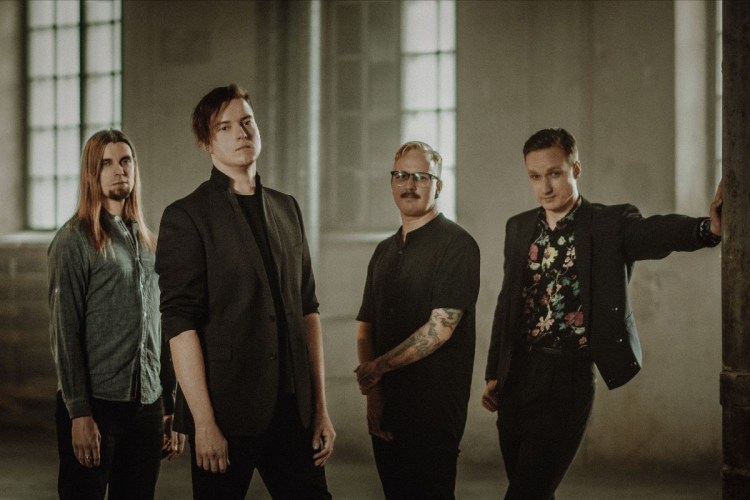
Finnish prog-pop trio Joviac lit a spark earlier this year with their vibrant single B.O.M.B, taken from their third full-length album Autofiction Pt. 1 – Shards, released on May 16. With its blend of bold melodies, emotional depth, and unapologetic pop flair, the track showcases the band’s fearless evolution. We caught up with frontman Viljami Jupiter Wenttola to chat.
‘B.O.M.B’ radiates optimism wrapped in that signature Joviac sheen. Was there a specific moment, or explosion, in your life that sparked the emotional core of this track?
I write music instruments first, usually with my guitar. Sometimes, vocal parts will jump out at me, and then I have to figure out what to say, but usually, the unifying message starts to solidify towards the end of the songwriting process.
With lyrics, I try to communicate what the instruments want to say, and when I kept asking myself, “What is this song about?” I kept coming back to a very optimistic and positive message.
The instrumental side went through a few different iterations, though. I started with “Haven”, the second song of the album. Originally, it was supposed to be much longer with more variety, but the end result felt forced. In the end, I left “Haven” alone as the short and sweet lead-in/intro song that it ended up as. I then repurposed a lot of the leftover material into a separate song, which became B.O.M.B.
You’ve described the need for emotional contrast in songwriting. Can you walk us through what a typical writing session looks like when you’re trying to tap into both ends of the emotional spectrum?
I need contrast and dynamics to keep things interesting. Life isn’t a flatline EKG graph (until you’re dead), so why should music be any different? It seems to be a core motivation of mine. Maybe not with every song, but at least when it comes to a full album, there need to be peaks and valleys, otherwise I get bored. I write music with my heart first and my brain second. I try to feel more than think when it comes to the creative process, so it’s not really a question of trying to tap into that spectrum of emotion, but more just letting emotion flow freely. That being said, it doesn’t always work, I’m not always emotionally available, and I often find myself in times of creative stagnation. That’s fine, though, I’m not a professional pop songwriter and I don’t need to write hits to make a living (or rather, I wouldn’t be able to), so I’ve learned to let the creative process take its own time. Sometimes it’s an unstoppable river of creativity, and I feel more like a conduit for some kind of higher power, and sometimes it trickles down at the pace of a glacial drip. Both are valid.
Joviac’s music feels like it’s walking a tightrope between 80s nostalgia, cinematic drama, and modern prog. How intentional is that fusion?
Nothing is intentional with Joviac’s music, or rather, nothing is premeditated. I’m a driven and ambitious person, so I’ve tried time and time again to set myself all kinds of outer musical goals or prerequisites for what our songs or albums should be like, but it always ends up choking the creative flow to a standstill.
So I’ve learned through A LOT of trial and error (mostly error) that I just need to be open and let whatever flows through me flow freely.
That being said, as I get older and become a better composer, I become better at communicating my emotions through my music. There’s less brain fog and frustration as to how to communicate my feelings. The flow becomes less obstructed. The floodgates are easier to open.
There’s an almost therapeutic tone to B.O.M.B. Do you write music more for your own healing, or are you thinking of the listener’s journey from the start?
Music is a very selfish expedition for me. I write music for myself because that’s the only audience I know, but I figure that if I really like something, there’s probably someone somewhere out there who could vibe with it too. I’d love to find more people like that and build more of an audience.
Sometimes I write music merely for the joy of writing music, but sometimes it also has more therapeutic functions. For example, there are a couple of songs on this newest album that are especially explorative and therapeutic for me. “Burn” and “Once” both deal with my past and the scars of growing up with a mentally unstable parent. It helps to exorcise those demons and music is a great tool for that.
Progressive music often leans into complexity, but Joviac also embraces infectious hooks and pop structure. How do you decide when to keep things simple and when to go full prog labyrinth?
I’d like to say that I always let the songs go where they want to go, and for the most part that’s true, but I must admit there were a few items from my “teenage prog nerd bucket list” that I want to check off with this album, some stuff I wanted to get out of my system. For example, I wanted to write an introductory instrumental that presented some recurring themes and motifs present on the album, you know, Overture 1928 style. That being said, I’m a huuuuge 80s pop fan, and I collect those albums on vinyl, so having this band where I’m free to mix and match these seemingly disparate (but actually quite similar!) styles and influences are just indicative of who I am musically.
You’ve got a beautiful, polished sound that still feels very alive on record. How do you translate that energy for the stage: do the songs evolve live, or do you stick to the studio feel?
We are pretty faithful to the album on stage as well. We’re not an old-school rock’n roll band, so we use backing tracks to fill out the show. It’s mostly just for stuff like backing vocals (I just happen to be the only band member who sings), background ambience, sound effects, percussion, and a little extra acoustic guitar, so nothing is playback; everything you see being played is played by us. We just don’t have the financial resources to haul a backing vocal section, percussionist, guitar tech who can step in to play acoustic guitar, and so forth, so we have to make due. That being said, live is always live, so the songs always sound a little different and feel a little different on stage. It’s still human.
This is your third full-length release. Looking back, what’s something you think you got right this time that you were still figuring out on earlier records?
I think every artist is always most proud of their newest creation, simply because they’re more experienced, more seasoned, and wiser.
We become better at communicating through the language of music, better at saying what we want to say. Just like with any other language, the more you speak it, the more eloquent and fluent you become.
It’s that growth and the traversed miles that make previous albums feel more immature than the newest one, but you have to look at each album as a product of its time, a snapshot into who we were.
 MyTouché Blog