
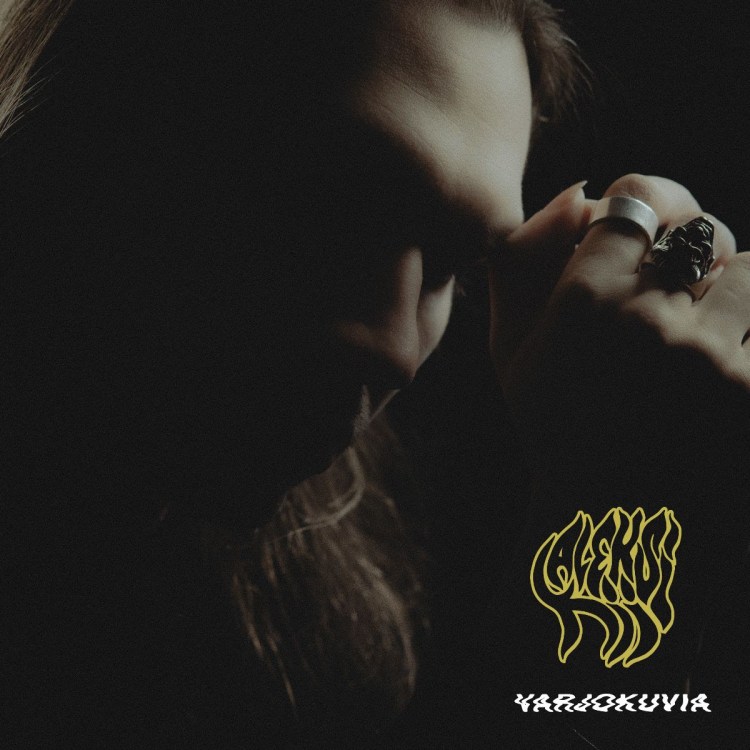
Fresh off releasing his new album “Varjokuvia“, Aleksi Kii is stepping boldly into a new era, shedding old skins, embracing deep-cut suomirock roots, and building a world where ghostly post-punk meets raw emotion. We sat down to talk about music, writing in Finnish without sounding only Finnish, and what it means to create art that feels like home.
You’ve left PA Kiiskilä behind and embraced your own name — Aleksi Kii. Was this transformation about music, identity, or finding peace with who you’ve become?
It’s a really good question, actually. Long story short, it’s all of that. The first name I had was something my friends gave me, and it was connected to some “blue” stuff I did. It’s really hard to explain in English. But now that I’ve been searching for my roots in rock and trying to find my own sound, I wanted a name that represents everything I am, fully. Something that also works for whatever I’m going to do in the future. And it’s also a good thing to do when you’re kind of shedding your skin, going through some inner transformation, growing as a person. Changing your artist name fits naturally into that.
You’ve said the album’s essence is connection. What kind of connection were you searching for when creating it, between you and the listener, or something more spiritual?
The thing about connection is that I sometimes have trouble connecting with myself. Your thoughts go everywhere, your emotions fluctuate. So for me it’s more about connecting with your emotions, how you feel, and grounding yourself. There’s also a bit of a spiritual aspect to it, but I’m not expressing it verbally or mentioning it directly in that way. I like that feeling you get when you put on music, hear a song, or read a poem — when you find some kind of kindred feeling through it. Maybe with the artist, with yourself, with nature, or with society, whatever it is. For me, art is the best way to connect. At least it works better than smartphones. That’s basically the idea.
You grew up in Ikuri, live in Pispala, and have toured the world. How do these different worlds echo in your music today?
I think it’s impossible. Like Yoda from Star Wars says, you have to unlearn what you have learned, but I think that’s really difficult. Whenever you do something, you always carry something from the things you did before. When I was a kid, I was in the forest looking for that connection. I never found it. But when I grabbed a guitar, I found it. First I found metal. Then I found Pantera. And then I found what they listened to, the blues. And that opened up even more.
And then, of course, the people you play with shape you too. I played with guys in Grave Pleasures, who were into post-punk. I lived with them for years and learned so much from them. Now that I’m doing my own thing, you can hear influences from those guys and from everything that came before.
And because I want to write my own stuff mostly in Finnish, I still want there to be something in it that isn’t only Finnish. I don’t want the music to sound like it’s meant exclusively for Finnish people.
You run your own label, Last Day of the North, with your wife, Saara Šamane. How does that creative independence influence your writing, and your sense of artistic integrity?
I have experience from a major label, and now from this kind of situation where we don’t have to think about anything except our own resources, what we can do. For example, our financial resources, or whether something is actually worth focusing on. The freedom comes from not having to ask anyone, not having to wait, not having to think about all that. It’s all up to you. But the difficult part is that you really have to work for it, because there’s nobody there pushing you. You have to push yourself. But it’s also nice, because if you don’t want to do something, you can simply skip it. There’s no one you need to please in that sense.
At the same time, it’s sometimes a necessity, because getting deals is hard. There are so many genres, so many albums, and in Finland a lot of labels don’t cover certain styles.
For example, what Sara is writing for Samane right now, it doesn’t fit neatly into many categories. So sometimes it’s actually a better idea to just handle it on your own. If you have the skill and the energy to do it, then it’s cool.
You’ve been part of 16 full-length albums, from post-punk to metal to psychedelic folk. What does “genre” mean to you now, or has it lost all meaning?
Music for me is like home. You kind of live there all the time. There are some things I don’t do anymore, for example, I used to have a lot of friends in the rap scene. I still have friends there, but I’m not as interested in that world now. But guitar is…
You know how samurai have the way of the sword? They live by the sword — it’s their lifestyle. For me, this is my lifestyle. That’s also the way I connect with people. I always think of projects and albums as places I go to during that time.
So if someone asks me to play guitar or oud on an album, I really focus on that completely while I’m doing it. I want to experience it fully and do it as well as I can. But then again, I’m quite… I don’t know the right word… an ADHD guy. Like, actually diagnosed ADHD. So I have a lot going on in my head all the time, and that’s why I start things easily. I have many things I never finished, but also many that I have finished. And now I’m learning to do less but with more focus. So at the moment, I just have a couple of things I’m really concentrating on.
You often write about outsiders and those who feel too much. Do you still see yourself as one of them?
That’s a good one. Because if you actually become one of them, you’re not an outsider anymore. And I think I’ve always felt like an outsider. I kind of like it, too, but I still search for communities, even though I’m a bit afraid of that.
I don’t know… maybe it’s a difficulty with trust or connecting. I know I’m not really an outsider, but I still feel like one a lot of the time. It’s a strange thing, because what you feel can be very different from what’s actually happening.
So yes, I still do feel like that quite often.
When listeners close their eyes and hear Varjokuvia, what do you hope stays with them long after the music fades?
I hope there’s something in the music that evokes a feeling you can carry with you. I believe that if something makes you feel tenderness, love, trust, or a sense of beauty, it also makes you a little better toward others. At least that’s what music does for me. And maybe it can help you move through certain emotions as well.
And finally, when the lights dim, the guitars are silent, and it’s just you and your thoughts… who is Aleksi Kii then?
I think he’s someone who loves art and tries to live inside it — and someone who tries to be a good person. Someone who doesn’t crush anyone’s balls. Like one of my friends said: stop crushing each other’s balls. It’s a simple truth for humanity.
 MyTouché Blog