
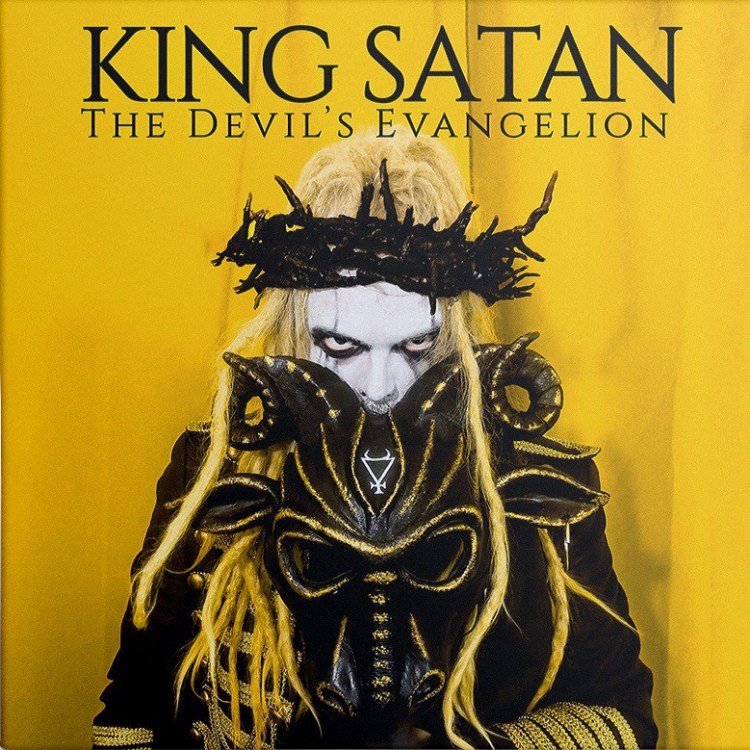
King Satan has never shied away from the bold or unusual, and The Devil’s Evangelion is a powerful testament to their artistry.
King Satan’s The Devil’s Evangelion offers a bold and genre-defying journey through themes of duality, rebellion, and self-discovery. Known for blending industrial metal with elements of electro, rock’n’roll, and symphonic black metal, the Finnish band has crafted a soundscape that is both immersive and thought-provoking. The album draws listeners in not only with its music but also with a philosophical narrative that examines humanity’s relationship with the archetypal “Devil” as a symbol of self-liberation and enlightenment. This album exceeded my expectations, not just as a listening experience, but as a deeply immersive journey into the surreal.
This band always surprises, and The Devil’s Evangelion rises above even its own intense ambitions. With its high-octane rhythms, evocative melodies, and thought-provoking lyrics, each track is a mosaic of shifting emotions and styles, coming together into a cohesive and powerful concept.
The album kicks off with “New Aeon Gospel,” a track that declares a new era of thought, urging listeners to transcend traditional dualities. Lyrics here allude to tearing down old constructs, reflecting the album’s central theme of “Chaos is the Law,” a call to embrace freedom beyond the binaries of good and evil. Following this, “Chaos Forever Now” features a powerful collaboration with Nachtmahr, pushing the intensity further with a celebration of the liberating chaos that King Satan sees as the true path to individuality.
The album’s thematic richness is deepened by songs like “Abyss of the Souls,” which contemplates isolation and enlightenment through stark, introspective lyrics. It’s a track that underscores the album’s exploration of the “abyss” as a space for spiritual rebirth, aligning with the concept of a devil as both a tempter and a guide. The lyrics reflect an understanding that enlightenment often requires stepping outside comfort zones, facing difficult truths, and even embracing paradoxes.
Standout tracks such as “The Carnivalesque of Dark & Light” and the title track, “The Devil’s Evangelion,” deliver an intense blend of heavy riffs, dance beats, and haunting symphonic elements. These songs mirror the album’s carnival-like duality, with lyrics that revel in destruction as a precursor to rebirth. “Destroy the World” further amplifies this theme, channeling a deep misanthropy mixed with hope for a reborn humanity capable of transcending its flaws.
Lyrically, The Devil’s Evangelion is both surreal and reflective, navigating existential themes with dark humor and a sense of cosmic irony. The album’s foreword introduces its narrative as a journey “under the eye of Satan,” exploring the complex interplay between human nature and divine aspirations. In songs like “The Devil’s Evangelion,” this theme reaches its zenith, casting the Devil as a figure that invites humanity to become its truest self by embracing its flaws, fears, and paradoxes.
In The Devil’s Evangelion, King Satan has created a work that is as challenging as it is electrifying, delivering a fusion of intense metal energy with philosophical depth. At times, the music evokes the dark theatrics of Marilyn Manson, though King Satan surpasses those influences with a sound that is entirely their own. The album pushes genre boundaries while inviting listeners to reflect on their own inner conflicts, making it a must-listen for fans of metal that dares to defy conventions and provoke thought. From its heavy beats to its surreal lyrics, The Devil’s Evangelion is an album that lingers, challenging listeners to face both the light and darkness within themselves.
King Satan is hitting the road soon – you can grab your tickets here!
Written by Péter Tepliczky
 MyTouché Blog